
Heated column compartment with precise solvent flow control.
Each parameter in the analytical LC is set and monitored very precisely.
The temperature of the column is an essential factor for a good separation and is adjusted depending on the problem and analytes.
In the preparative field, temperature control for columns has been thought of, but columns are only heated externally.
For low flow rates in the analytical field this might be sufficient, but for preparative separations and high flow rates a lot of efficiency is lost when the mobile phase is not heated.
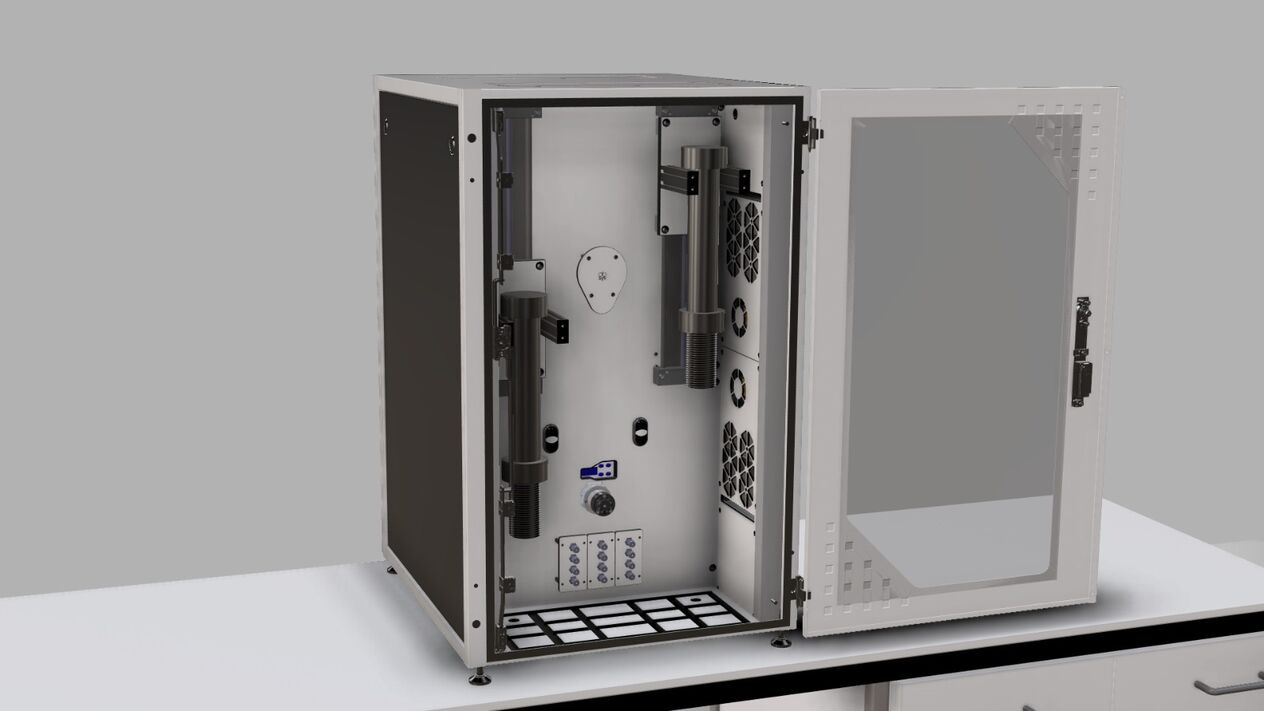
Heating the mobile phase offers several key advantages that significantly improve chromatographic performance and efficiency. By increasing the temperature of the mobile phase, the system benefits in the following ways:
Reduced viscosity allows the solvent to flow more easily through the system, enhancing overall performance.
Faster run times translate to higher throughput and improved lab productivity.
Heating reduces resistance in the column, enabling smoother solvent flow and reducing strain on the system.
With lower viscosity and back pressure, it’s possible to increase flowrates while maintaining sharp, well-resolved peaks.
Elevated temperatures increase the diffusion rate, promoting quicker and more efficient analyte-stationary phase interactions.
Heating minimizes differences in solvent enthalpy, reducing baseline noise and improving signal stability.